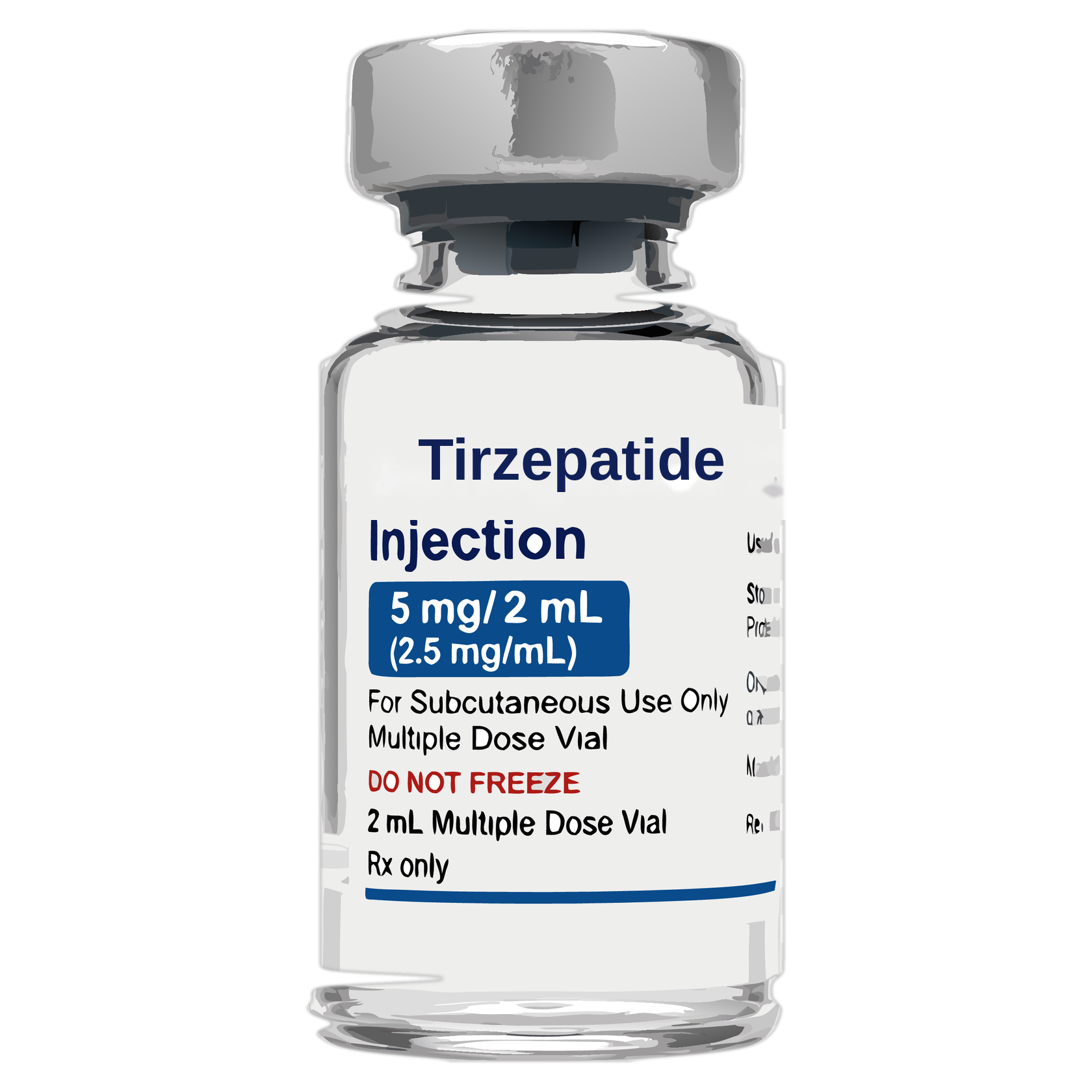
Compounded Tirzepatide
Tirzepatide is a dual GIP and GLP-1 receptor agonist that targets two metabolic pathways simultaneously. Clinical studies have associated tirzepatide with greater average weight reduction compared to GLP-1 therapy alone. It is compounded by our licensed 503A pharmacy partner as an injectable vial with B12 included. A 3-month supply option is available at checkout.
- Dual receptor mechanism targets appetite and blood sugar pathways
- Associated with greater average weight reduction in clinical studies
- Personalized titration protocol under physician supervision
No commitment · Cancel anytime · Physician evaluation required
About Tirzepatide
Tirzepatide is a dual GIP (glucose-dependent insulinotropic polypeptide) and GLP-1 (glucagon-like peptide-1) receptor agonist. By targeting two incretin pathways simultaneously rather than one, it is designed to produce a more pronounced effect on appetite regulation and blood sugar balance than single-pathway GLP-1 therapy alone.
What the research shows
The phase 3 SURMOUNT-1 trial, a 72-week randomized, double-blind, placebo-controlled study of adults with obesity or overweight, found that participants achieved average weight reductions ranging from 16% to 22.5% of baseline body weight depending on dose, with about 9 out of 10 participants losing weight overall. A subsequent head-to-head trial (SURMOUNT-5) comparing tirzepatide directly against single-pathway GLP-1 therapy found tirzepatide produced greater average weight reduction over 72 weeks.
Long-term follow-up from SURMOUNT-1 found that most participants maintained the majority of their weight loss for up to three years while remaining on treatment, consistent with the broader GLP-1/incretin class finding that sustained results depend on continued therapy.
Who it's for
Tirzepatide is generally considered by adults seeking a physician-supervised weight management program who may benefit from a dual-pathway mechanism, including those who have plateaued on single-pathway GLP-1 therapy.
How It's Administered
Tirzepatide is administered as a once-weekly subcutaneous injection. Your physician will determine your starting dose and titration schedule based on your evaluation, gradually increasing the dose over time to help minimize gastrointestinal side effects.
Program length is individualized. As with other incretin-based therapies, clinical data indicates that weight is commonly regained after stopping treatment, so many patients continue on an ongoing basis alongside lifestyle changes.
Safety & Considerations
The most commonly reported side effects across clinical trials are gastrointestinal — nausea, diarrhea, vomiting, and constipation — most often mild-to-moderate and more frequent during dose escalation. As with other medications in this class, thyroid C-cell tumors have been observed in rodent studies; human relevance has not been determined.
Tirzepatide is not appropriate for everyone. Your physician will review your personal and family medical history during your evaluation, including any personal or family history of certain thyroid tumors, to determine whether this program is appropriate for you. A physician evaluation and valid prescription are required, and not all applicants will qualify.
Selected References
The following peer-reviewed sources informed the summary above, drawn from the phase 3 SURMOUNT clinical trial program.
- Tirzepatide Once Weekly for the Treatment of Obesity (SURMOUNT-1)
New England Journal of Medicine, 2022 - Head-to-Head Comparison of Tirzepatide and Semaglutide (SURMOUNT-5)
Reporting on results published in New England Journal of Medicine, 2025 - SURMOUNT-1 3-Year Weight Maintenance Follow-Up
Presented at European Congress on Obesity (ECO), 2025