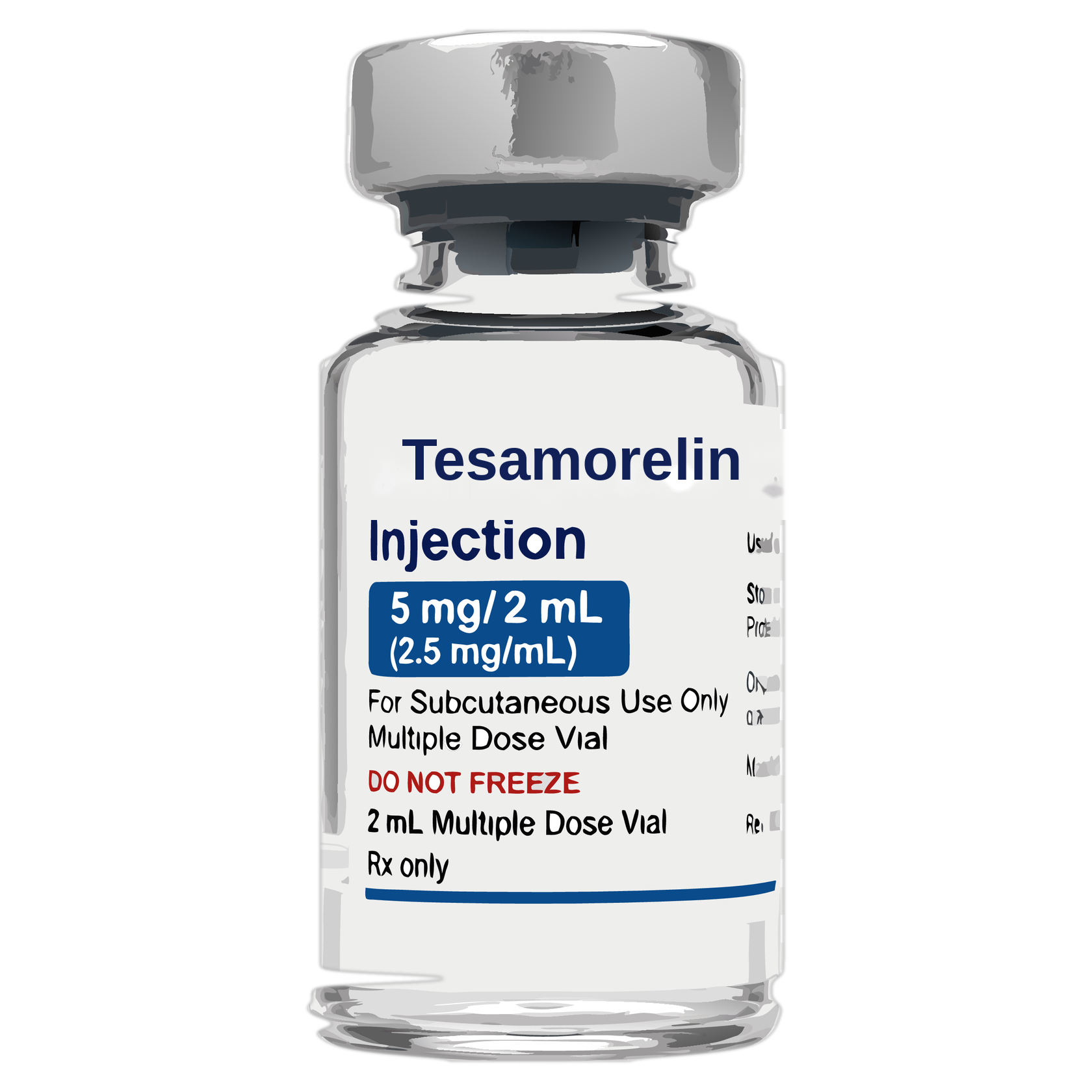
Tesamorelin
Tesamorelin is a synthetic growth hormone-releasing hormone (GHRH) analog with FDA-approved clinical trial data supporting its use for reducing visceral abdominal fat in HIV-associated lipodystrophy — giving it one of the strongest clinical trial foundations of any peptide in this category.
- Backed by FDA-approved Phase 3 trial data
- Studied for visceral fat reduction
- Associated with modest lean mass preservation
No commitment · Cancel anytime · Physician evaluation required
About Tesamorelin
Tesamorelin is a stabilized GHRH analog that stimulates the pituitary to release growth hormone in its natural pulsatile pattern. Its active ingredient has been FDA-approved since 2010 as a prescription medication for reducing excess visceral abdominal fat in adults with HIV-associated lipodystrophy.
What the research shows
Two pivotal Phase 3 trials (Falutz et al., New England Journal of Medicine, 2007) in over 800 participants found tesamorelin reduced visceral adipose tissue by roughly 15-18% versus placebo over 26 weeks, with improvements in triglycerides. A follow-up randomized trial also documented reductions in liver fat. Effects are visceral-fat-selective (they don't meaningfully change subcutaneous fat) and reverse after stopping the medication.
An important distinction: the FDA approval is specifically for HIV-associated lipodystrophy. Use for general body composition or anti-aging goals — as offered here — is off-label. The compounded version is also a different product from the FDA-approved finished drug, though it shares the same active mechanism.
Who it's for
Tesamorelin is considered by adults interested in visceral fat and body composition support, often alongside a GLP-1 program, with the caveat that the strongest trial evidence comes from a different patient population than most people using it through telehealth today.
How It's Administered
In its FDA-approved use, tesamorelin is dosed as a daily subcutaneous injection. Your physician will determine an appropriate protocol during your evaluation.
Safety & Considerations
In clinical trials, the most common side effects included injection site reactions, joint pain, and swelling. Long-term cardiovascular safety data beyond about a year is limited per FDA labeling, and effects on IGF-1 levels are monitored during treatment.
Your physician will review your health history and discuss these considerations during your evaluation.
Selected References
The following peer-reviewed sources informed the summary above. Evidence quality varies — some reflect large controlled human trials, others early-stage or animal research, as noted.
- Falutz J, et al. Effects of tesamorelin on visceral fat and liver fat in HIV patients
New England Journal of Medicine, 2007 (PMID 18057338)