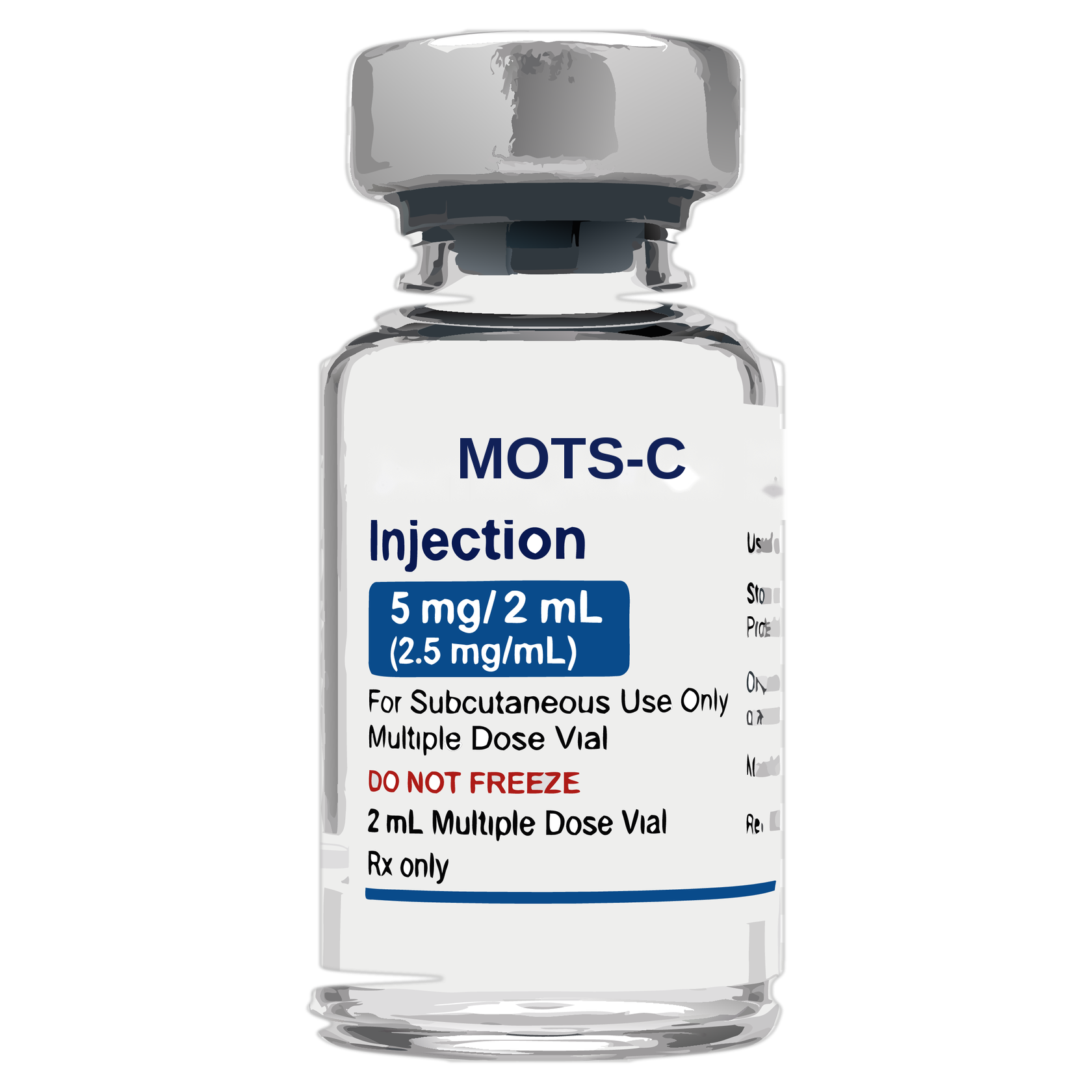
MOTS-C
MOTS-C is a peptide encoded by mitochondrial rather than nuclear DNA, discovered in 2015 and studied for its role in regulating glucose and lipid metabolism, insulin sensitivity, and exercise adaptation.
- Mitochondria-derived peptide studied in metabolic research
- Associated with AMPK pathway activation in laboratory studies
- Levels correlate with exercise and decline with age
No commitment · Cancel anytime · Physician evaluation required
About MOTS-C
MOTS-C (Mitochondrial Open Reading Frame of the 12S rRNA Type-C) was first characterized by Lee and colleagues in a 2015 Cell Metabolism paper as a novel mitochondria-encoded peptide that regulates metabolic homeostasis via AMPK pathway activation.
What the research shows
The foundational research is preclinical: in mouse models, MOTS-C treatment prevented high-fat-diet-induced weight gain and restored insulin sensitivity in aged mice. Human research to date is primarily observational — studies have found circulating MOTS-C levels decline with age and correlate with insulin sensitivity and endurance exercise training, but there is limited published human trial data on exogenous MOTS-C administration specifically (as opposed to measuring the body's own natural levels).
Who it's for
MOTS-C is generally considered by adults interested in metabolic and exercise-adaptation support as part of a broader wellness program, with the understanding that human interventional data is still emerging relative to the mouse-model research base.
How It's Administered
MOTS-C is typically administered as a subcutaneous injection on a schedule your physician determines during your evaluation.
Safety & Considerations
Animal studies have not identified significant toxicity at studied doses, and early human use has not surfaced significant reported adverse effects, but dedicated human safety trials are limited.
Your physician will review your health history during your evaluation. Not all applicants will qualify.
Selected References
The following peer-reviewed sources informed the summary above. Evidence quality varies — some reflect large controlled human trials, others early-stage or animal research, as noted.
- Lee C, et al. The mitochondrial-derived peptide MOTS-c promotes metabolic homeostasis and reduces obesity and insulin resistance
Cell Metabolism, 2015 (PMID 25738959) - The Effect of Chronic Endurance Exercise on Serum Levels of MOTS-c and Humanin in Professional Athletes
PMC (National Institutes of Health)