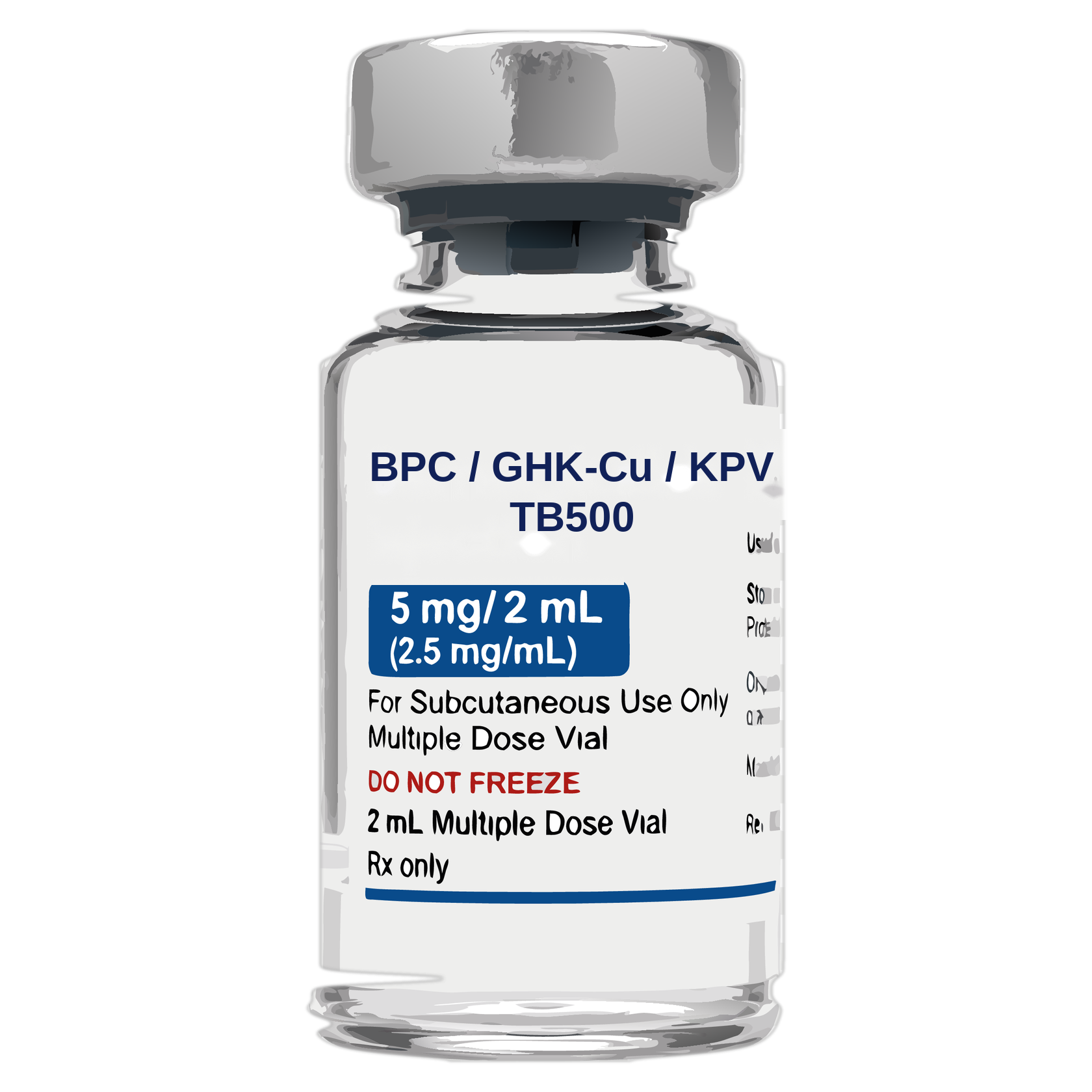
BPC / GHK-Cu / KPV / TB-500
This is the most comprehensive combination in the recovery category, adding GHK-Cu — a copper-binding tripeptide studied for collagen synthesis and matrix remodeling — to BPC-157, TB-500, and KPV.
- Advanced quad-peptide blend for comprehensive tissue support
- Adds GHK-Cu's matrix-remodeling profile to the recovery stack
- Combines four distinct, complementary recovery mechanisms
No commitment · Cancel anytime · Physician evaluation required
About BPC / GHK-Cu / KPV / TB-500
GHK-Cu (glycyl-L-histidyl-L-lysine copper complex) is a naturally occurring copper-binding tripeptide, first isolated from human plasma in the 1970s, studied for effects on collagen and elastin synthesis, matrix metalloproteinase regulation, and wound healing — predominantly in topical/dermatological research. It's combined here with BPC-157, TB-500, and KPV.
What the research shows — and an important distinction
GHK-Cu has more human clinical trial support than the other three components in this blend, but nearly all of that trial data is for topical application in dermatology — wound healing, scar reduction, and skin aging studies, including small randomized controlled trials. The evidence base for injectable/systemic GHK-Cu, which is how it's combined and dispensed here, is considerably thinner. BPC-157, TB-500, and KPV each carry the same preclinical-heavy evidence profile described in their individual research summaries. No study has evaluated this four-peptide combination together in humans.
Who it's for
This combination is generally considered by adults looking for the broadest tissue-support stack available, with a clear understanding that it combines several early-stage compounds and that GHK-Cu's strongest evidence is for a different route of administration than injection.
How It's Administered
Typically administered as a subcutaneous injection. Your physician will determine dosing and duration based on your evaluation.
Safety & Considerations
Each component has a generally favorable preclinical/topical safety record, but combined injectable use of all four has not been studied in controlled human trials. Your physician will review your full health history during your evaluation, and this program is not appropriate for everyone.
Selected References
The following peer-reviewed sources informed the summary above. Evidence quality varies — some reflect large controlled human trials, others early-stage or animal research, as noted.
- Skin Regenerative and Anti-Cancer Actions of Copper Peptides
MDPI, Cosmetics journal - Topical GHK-Cu Gel for Acute Skin Wound Healing (Phase 2 RCT)
ClinicalTrials.gov, NCT07437586