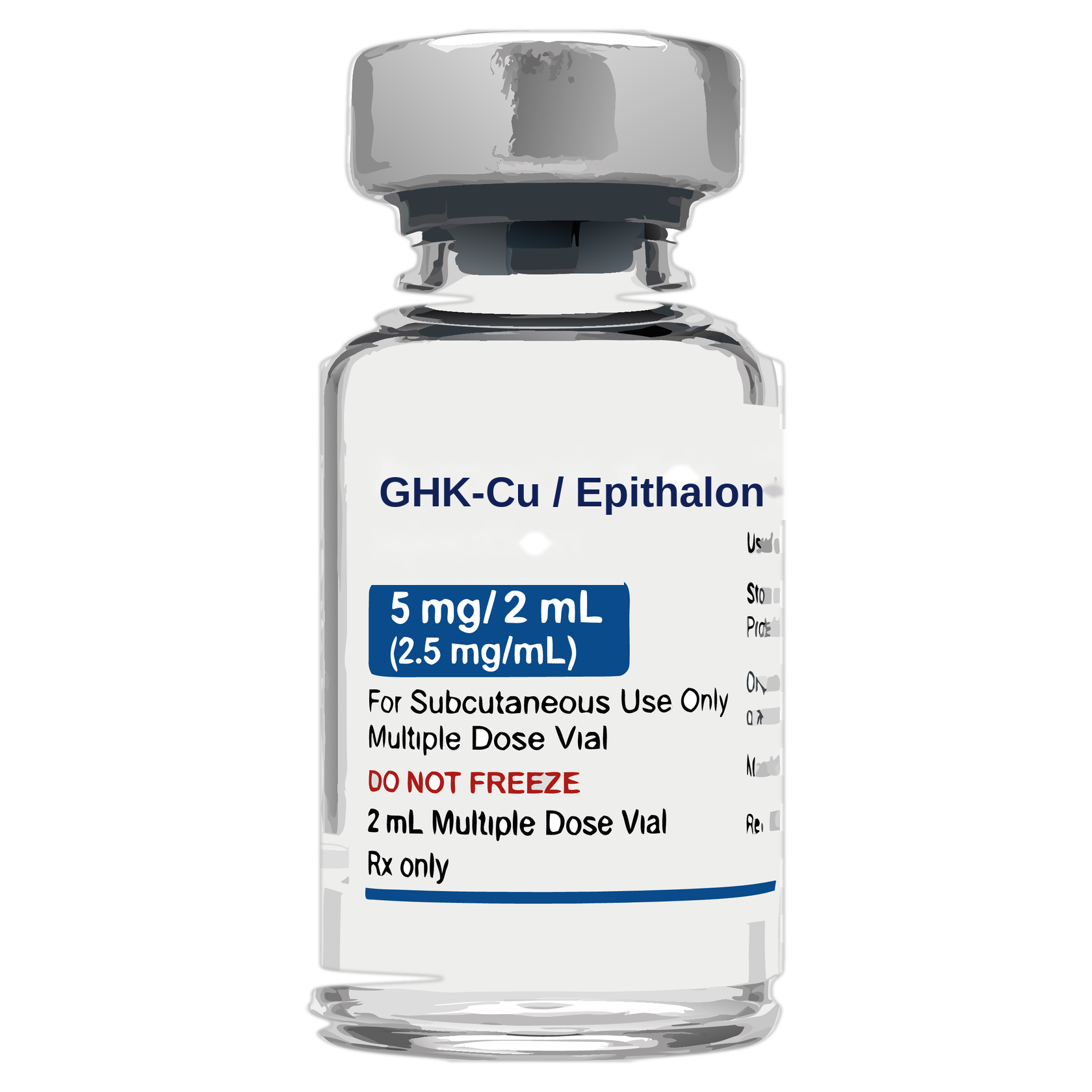
GHK-Cu / Epithalon
This combination pairs GHK-Cu, studied for collagen/matrix support (primarily via topical research), with Epithalon, studied for telomerase activation — targeting two different mechanisms associated with cellular aging.
- Pairs a matrix-remodeling copper peptide with a telomerase-focused peptide
- Targets two distinct cellular aging pathways
- Combines GHK-Cu's tissue research with Epithalon's longevity research
No commitment · Cancel anytime · Physician evaluation required
About GHK-Cu / Epithalon
GHK-Cu and Epithalon are each studied for different aspects of cellular aging: GHK-Cu for extracellular matrix remodeling and tissue-level renewal, Epithalon for telomerase activity and pineal/circadian regulation at the cellular level. See each compound's individual research summary for detail — GHK-Cu has meaningfully more human RCT data (though concentrated in topical dermatological use) than Epithalon, whose evidence is predominantly preclinical and drawn largely from a specific research lineage.
Who it's for
This combination is generally considered by adults interested in a broader cellular-aging-focused wellness program, understanding that the two compounds carry different (and in Epithalon's case, still-developing) evidence bases.
How It's Administered
Typically administered as a subcutaneous injection. Your physician will determine dosing and schedule during your evaluation.
Safety & Considerations
See the individual safety notes for GHK-Cu and Epithalon. Neither compound has the large-scale controlled human safety trial base of an FDA-approved medication for the injectable, systemic use offered here.
Your physician will review your health history during your evaluation. Not all applicants will qualify.
Selected References
The following peer-reviewed sources informed the summary above. Evidence quality varies — some reflect large controlled human trials, others early-stage or animal research, as noted.
- Skin Regenerative and Anti-Cancer Actions of Copper Peptides
MDPI, Cosmetics journal - Overview of Epitalon—Highly Bioactive Pineal Tetrapeptide with Promising Properties
PMC (National Institutes of Health), 2025