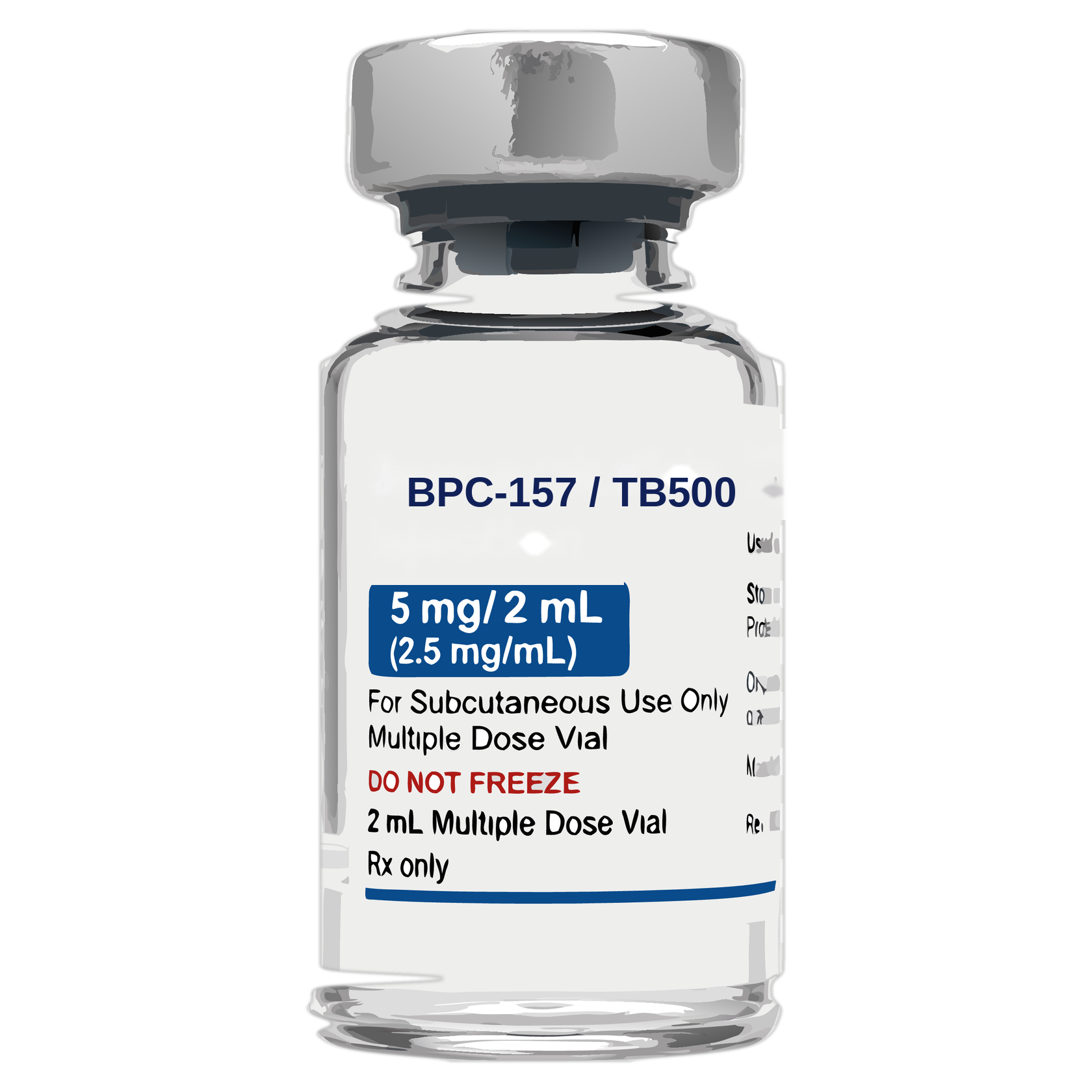
BPC-157 / TB-500
This combination pairs BPC-157 with TB-500 (a synthetic fragment of Thymosin Beta-4) — two peptides studied, largely in animal models, for complementary roles in tissue repair, angiogenesis, and inflammation modulation.
- Combines two of the most-studied recovery peptides
- BPC-157 paired with Thymosin Beta-4 for synergistic tissue repair
- Studied for inflammation management support
No commitment · Cancel anytime · Physician evaluation required
About BPC-157 / TB-500
BPC-157 and TB-500 are both studied for tissue repair, but through different mechanisms: BPC-157 promotes angiogenesis and modulates nitric oxide pathways, while TB-500 (Thymosin Beta-4) works primarily through actin regulation, driving cell migration to injury sites and supporting new blood vessel formation.
What the research shows — and its limits
Both peptides individually have a substantial preclinical (animal and cell-culture) research base spanning decades. TB-500's foundational wound-healing work (Malinda et al., Journal of Investigative Dermatology, 1999) and BPC-157's tissue-repair literature are both well-documented in animal models. Human evidence for either compound remains limited to small case series and retrospective reports rather than controlled trials — a 2025 systematic review of BPC-157 in sports medicine explicitly noted the compound is not FDA-approved and human data remains sparse, and the same caveat applies to TB-500. The combination itself has not been studied together in a published human trial.
Who it's for
This combination is generally considered by adults focused on musculoskeletal recovery, understanding that most of the supporting evidence comes from animal research rather than human clinical trials.
How It's Administered
Both peptides are typically administered as subcutaneous injections, often at or near the area of concern. Your physician will determine dosing and duration during your evaluation.
Safety & Considerations
Animal studies for both compounds have generally reported favorable safety profiles with no major toxicity at studied doses, and early human use hasn't surfaced significant reported adverse effects — but neither compound has the large-scale controlled human safety data of an FDA-approved medication.
Neither compound is FDA-approved, and BPC-157 is banned by some sports anti-doping organizations. Your physician will discuss these considerations during your evaluation.
Selected References
The following peer-reviewed sources informed the summary above. Evidence quality varies — some reflect large controlled human trials, others early-stage or animal research, as noted.
- Malinda KM, et al. Thymosin beta4 accelerates wound healing
Journal of Investigative Dermatology, 1999 - Emerging Use of BPC-157 in Orthopaedic Sports Medicine: A Systematic Review
SAGE Journals, 2025