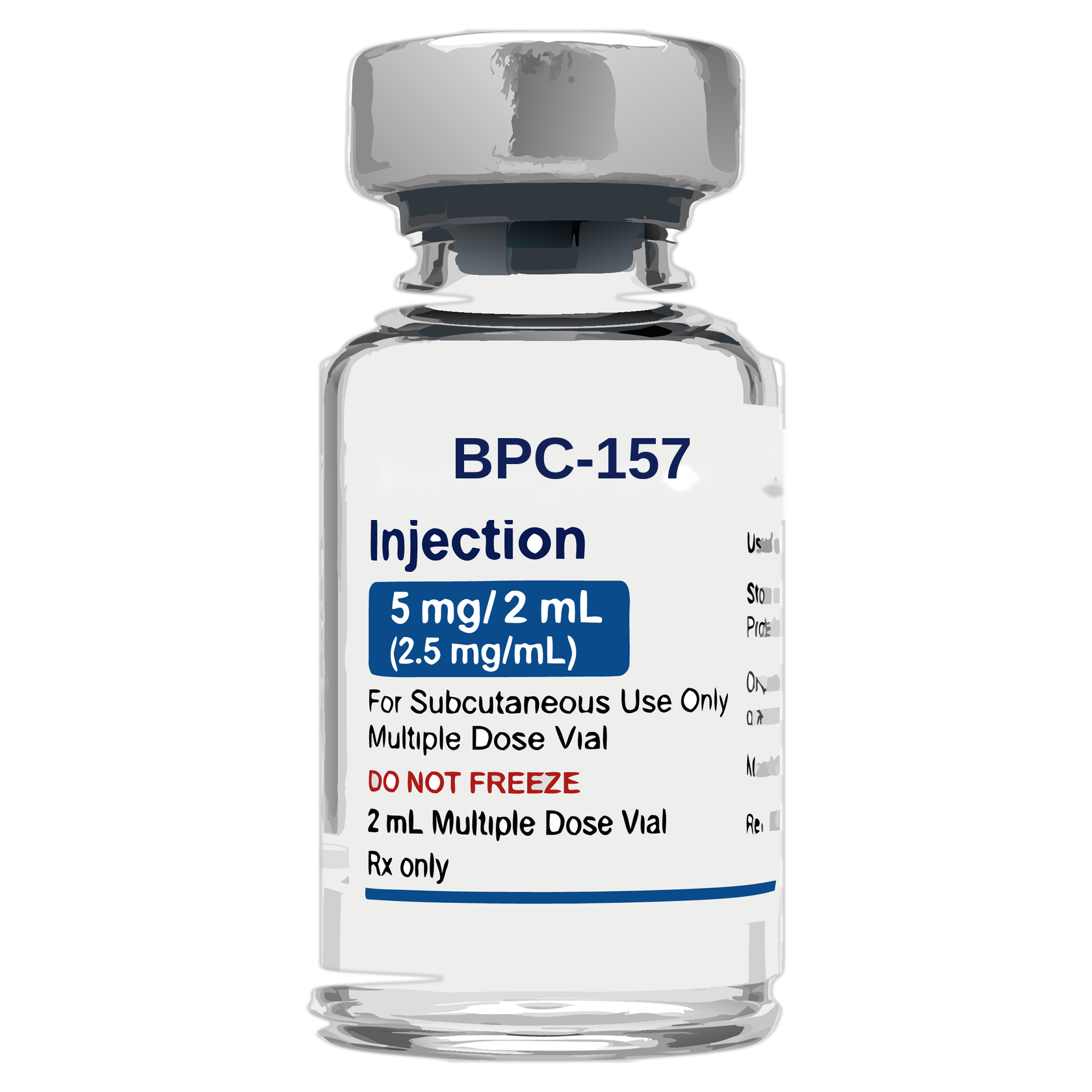
BPC-157
BPC-157 is a synthetic peptide fragment derived from a protein found in gastric juice. It has been studied extensively in animal models for its role in tissue repair, and has drawn significant interest in sports medicine and recovery contexts — though human clinical research remains limited.
- Studied for tissue repair and recovery support
- May support tendon, ligament, and joint healing
- Researched for gut lining and gastrointestinal support
No commitment · Cancel anytime · Physician evaluation required
About BPC-157
BPC-157 ("Body Protection Compound-157") is a synthetic pentadecapeptide (15 amino acids) first isolated from human gastric juice. It has been studied since the 1990s, primarily in animal models, for effects on angiogenesis (new blood vessel formation), collagen synthesis, fibroblast activity, and tissue healing in muscle, tendon, ligament, bone, and gastrointestinal tissue.
What the research shows — and what it doesn't
It's important to be direct about the evidence base here: the substantial majority of BPC-157 research is preclinical (animal or cell-based). A 2025 systematic review of the orthopaedic sports medicine literature covering studies from 1993–2024 found consistent pro-healing effects across animal models of muscle, tendon, ligament, and bone injury, but noted that BPC-157 is not FDA-approved and human data remains sparse.
Human evidence is limited to a small number of retrospective case series — for example, one retrospective review of 16 patients receiving intra-articular knee injections reported symptom improvement, but had no control group and a small sample size. Recent narrative reviews have explicitly concluded that "caution is advised in human use until robust clinical data are available."
Who it's for
BPC-157 is generally considered by adults focused on recovery from musculoskeletal strain or looking for gut-related support, understanding that the evidence for human use is still developing relative to the animal research base.
How It's Administered
BPC-157 is typically administered as a subcutaneous injection, often at or near the site of concern for localized recovery support, on a schedule determined by your physician based on your evaluation.
Program length and dosing are individualized — your physician will discuss what's appropriate based on your goals and health history.
Safety & Considerations
Animal studies have generally reported a favorable safety profile with no major toxicity observed at studied doses, and early human use has not surfaced significant reported adverse effects. However, long-term human safety data does not yet exist in the way it does for FDA-approved medications, and no large controlled human safety trials have been conducted.
BPC-157 is not FDA-approved for any indication and is banned by some sports anti-doping organizations. Your physician will discuss these considerations during your evaluation, and this program is not appropriate for everyone.
Selected References
The following peer-reviewed sources informed the summary above. Evidence quality varies — some reflect large controlled human trials, others early-stage or animal research, as noted.
- Emerging Use of BPC-157 in Orthopaedic Sports Medicine: A Systematic Review
SAGE Journals / American Journal of Sports Medicine family, 2025 - Regeneration or Risk? A Narrative Review of BPC-157 for Musculoskeletal Healing
PMC (National Institutes of Health), 2025 - From Regeneration to Analgesia: The Role of BPC-157 in Tissue Repair and Pain Management
PubMed, 2026 - Stable Gastric Pentadecapeptide BPC 157 and Wound Healing
PMC (National Institutes of Health)